
In the wake of Grenfell Tower, what does a modern fire safety system look like? How can facilities managers (FMs) improve their systems? Dave Howell reports.
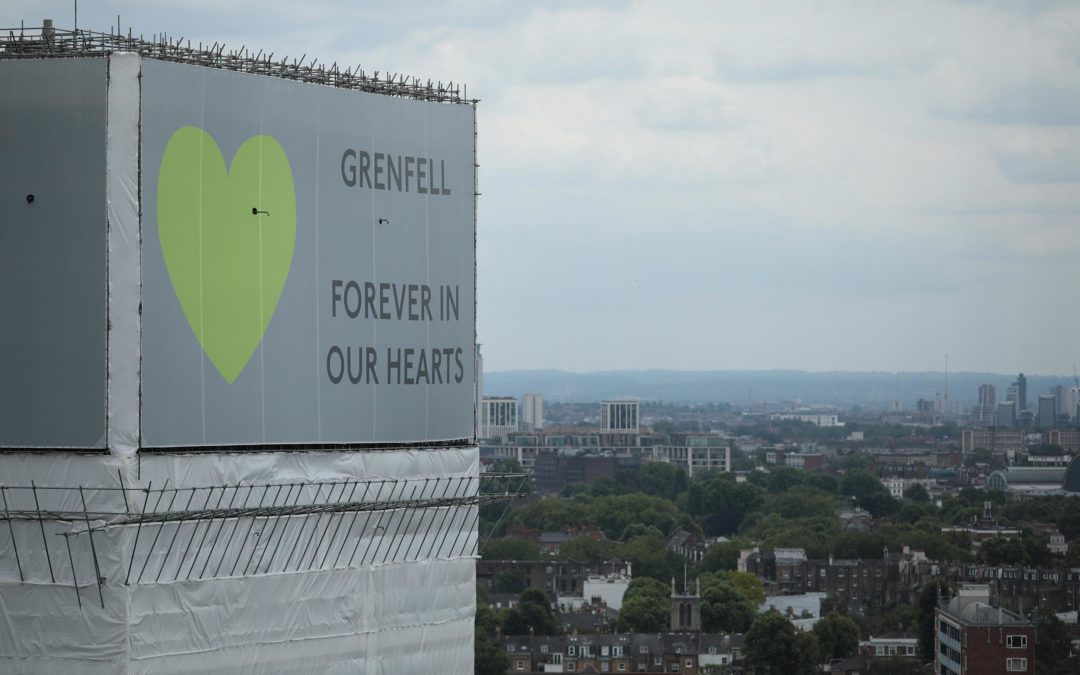
The fire that took place at Grenfell on 14 June 2017 through the spotlight on not only fire safety in tower blocks but also the entire fire prevention environment encompassing building materials, construction and maintenance.
In the wake of the disaster, a complete review of building regulations was undertaken to assess what changes need to take place to prevent another fire like Grenfell. In its report, the Independent Reference Group said:
“The interim report of Dame Judith Hackitt’s ongoing Independent Review of Building Regulations and Fire Safety is scathing in their finding that the current regulatory system for ensuring fire safety in high-rise buildings is not fit for purpose leaving room for those who want to take shortcuts to do so. Individual cladding elements are being used as part of compound systems that are not being fully tested as complete systems. The widespread use of desktop studies to assess equivalence of products and systems is not properly controlled.”
For FMs that are managing estates that could contain similar materials to those used to construct and refurbish the Grenfell Tower, an assessment of their premises has been taking place. The practical application of the knowledge gained since Grenfell is now influencing construction materials being used and how building regulations may have to change.
Lewis Smales, Commercial Director at FireWright, commented: “There has certainly been a shift in the consciousness of the construction sector and the need to ensure its fire safety systems are robust in the wake of Grenfell. We have experienced an uplift in the requirement for our fire-retardant timber treatments and more specifically the treatment we apply to timber for use in the assembly stage of a construction build. The key is to minimise the risk of ignition in the first instance and we are seeing more businesses in the timber sector attempting to mitigate this with the use of our treatments.”
A new environment
Speaking to David Prince. MIFireE, MIFSM, FdSc, Tech IOSH, LCGI, Dip(Ed)
Nationally Accredited Fire Risk Assessor Register (NAFRAR) No. 0151
FRACS (Fire Risk Assessor Certification Scheme) No. 73
Member of the UK-AFI (Fire Investigation).
Director at Fire Safety Risk Assessment Consultancy Limited, Croner-i asked:
Has the implementation of fire safety systems shifted in the wake of Grenfell?
“Initially, many larger organisations were proactive and keen to ensure that the fire safety precautions of their business where correct. However, more than 12 months on from the Grenfell disaster I have noted a decline and the initial ‘knee-jerk’ reaction from some companies has started to ‘wane’ away as the reality of the cost implications hits home, with some companies facing millions of pounds worth of remedial repairs.
“The wider question is perhaps: ‘why’, when the Regulatory Reform (Fire Safety) Order 2005 (FSO 2005), has been in place for 12 years, are the fire precautions of some premises so poor?
“The legacy fire safety issues I find on a weekly basis are worrying, particularly where the company have contracted — sometimes for many years — their fire risk assessments (FRAs) to be undertaken by an external company only to find that the FRA was inadequate. What’s more, they find themselves facing large bills to correct, and in some cases, install for the first time, fire safety precautions that should have been completed years ago. In addition, they find themselves facing enforcement or persecution action from the local authority fire and rescue service.”
For facilities and health and safety managers, what does modern fire safety look like for their businesses or organisations?
“Many facilities, environmental and health and safety managers, while experts in their field and their buildings, would admit that they are not experts in fire safety and rely upon the FRA to provide proper and competent advice about how they meet their legal and statutory duties under Article 8(1)(a) of the FSO 2005, ‘Duty to take general fire precautions’ for the company employees which Article 33 states, ‘… in any proceedings for an offence under this order, except for a failure to comply with Article 8(1)(a) … it is an offence for the person charged to prove that they took all reasonable precautions…’, hence the reliance upon a competent FRA.
“The National Fire Chiefs Council (formerly CFOA) many years ago issued advice that companies should ensure the competence of their fire risk assessor — all the guidance documents repeat the same advice and the Hackitt report reinforces this. The Health and Safety at Work Act states that there is a duty to ensure that any person contracted is competent, and I would urge companies to look to the registers of fire risk assessors when looking for a competent fire risk assessor.”
Is there a new drive to improve the specifications of the floor and wall coverings to enhance their fire safety?
“The spread of flame over surfaces tests have not really changed for many years, and they are generally fit for purpose. The issue is that they are sometimes eroded away or not managed properly. I meet many facilities and health and safety managers who are constantly frustrated as other departments within the business turn their fire sterile escape routes into storage or pieces of artwork.
“However, by far the worst culprits are schools. How many times do we see corridors, which are sometimes the only means of escape and classrooms turned into one big display of artwork brilliantly crafted by the children in the school; but with Heads more worried about their Ofsted rating than fire safety they frequently ignore the best advice.”
Are businesses and organisations pushing forward with the recommendations (where applicable) of the Hackitt enquiry?
“I think that the simple answer here is only the large companies, and as indicated above, the realisation of cost, for some, is inhibitive. Many SME’s are unaware of the report.”
Do you expect a significant overhaul of building regulations once Brexit is complete and frees up legislative time?
“No, is the simple answer. The draft changes remain woefully inadequate and continuing to permit flammable cladding up to 18 metres is deluded. We should adopt the Scottish standard and they should be retrospective.
“For the 27 years, I was in the fire service we carried ladders which had an effective working height of 13.5 metres, this is 4.5 metre (almost 15 feet) short of the historic 18 metres. Some fire and rescue services no longer carry ladders of this size on their front-line appliances. The reality is that frequently it is difficult to get ladders close enough the external face of a building to use them, and now many buildings are hermetically sealed with no openable windows.”
Clearly, Grenfell will have far-reaching consequences for all those who need to ensure they support their duty of care to their workforces. Changes are coming to building regulations, but as these come into focus, the cost and potentially massive changes needed to shift to safer construction and refurbishment materials are only now being debated.
Summary
Facilities and health and safety managers need to pay close attention to how the regulatory landscape might change and how this could impact their estates.
Carrying out new fire safety audits should be a priority to identify any areas of an estate that could pose an additional fire risk, and health and safety assessments should refocus on fire safety.
Any refurbishments that are planned or taking place should be further assessed and the materials being specified interrogated for their compliance with existing fire regulations.